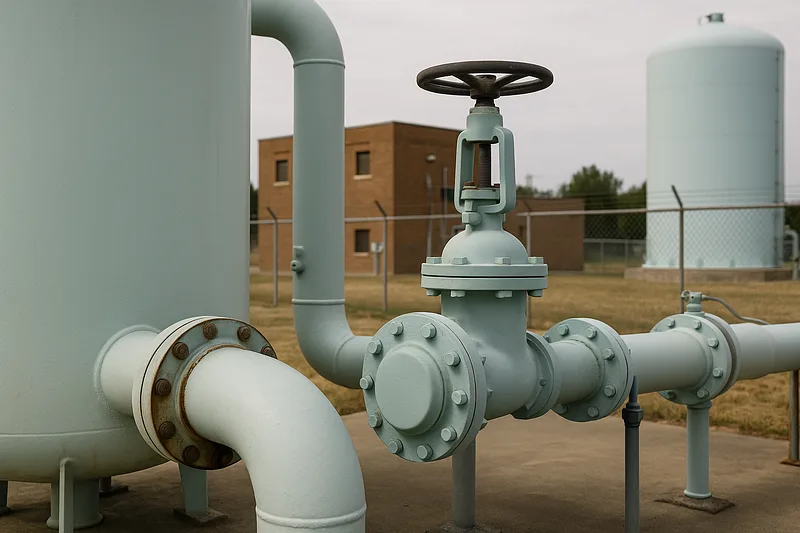
Utilities members kicked a big, value-laden question up to the City Council: should Two Rivers keep adding fluoride to drinking water. The committee also got a blunt update on PFAS testing and sludge disposal pressures coming from state permit requirements.
No public comments or communications recorded for this meeting.
The committee heard that the 2025 lead service line replacement work is close to done, with about 30 replacements left, but pavement restoration is still catching up after the May 17 windstorm and debris cleanup. For 2026, Mammoth Construction was described as starting in early June on 23rd Street near Jefferson and moving west, with property owners to be notified about access impacts. This is the kind of work residents feel directly — street access, driveways, and how quickly the city restores pavement after crews leave.
Page 1 — source unresolved
Staff laid out multiple state-driven compliance and operations issues. The utility must complete PFAS sampling and submit a report to WDNR by the end of July 2026, and staff said sludge disposal is getting harder because some farm landowners are reluctant to accept sludge that could contain detectable contaminants. They also described back-and-forth with WDNR on the CMOM plan and the city’s sewer overflow response plan, with a mid-July deadline to revise and resubmit — another example of how outside requirements can squeeze staff time and limit local flexibility.
Page 1 — source unresolved
On operations, staff reported reduced impacts from Riverside Foods’ industrial wastewater, with sampling showing lower loadings and a plan for further reductions. They also discussed polymer testing aimed at producing drier sludge while cutting chemical costs; the first field trial didn’t meet expectations, and a second trial was proposed. These are the kinds of behind-the-scenes changes that can affect treatment performance and long-term costs, even if residents don’t see them day-to-day.
Page 2 — source unresolved
Staff warned that a SCADA alert/monitoring component is stuck on Windows 10, creating a security and reliability concern now that routine updates have ended. A full SCADA replacement was estimated at about $130,000, but staff is exploring a temporary Windows 10 security extension for under $1,000 to buy time. This is a classic utility bind: the system still “works,” but the tech underneath is aging into a costly replacement cycle.
Page 2 — source unresolved
Wastewater staff reported major maintenance work: cleaning the west clarifier, drawing down the east clarifier next, and cleaning an outer weir ring that staff said hasn’t been done in about 20 years — now planned as annual maintenance. They also reported cleaning 6 of 17 lift stations. This is routine-sounding, but it’s the kind of preventive work that can reduce breakdowns and overflows if it’s kept up consistently.
Page 2 — source unresolved
Staff said a recent outage appears tied to a bird nest on a large pole near the West Twin River, and the city is working with Parks & Rec on a Bird Foundation grant request (about $13,000) for nesting platforms and educational features. The electric utility also said it’s reviewing customer programs like shade trees, EV charging, solar assistance, and supply sourcing. Separately, staff is evaluating a second electrical feed to Woodland Industrial Park to improve reliability since it’s currently served by a single feeder.
Page 3 — source unresolved
The water utility director walked through treatment chemicals and zeroed in on fluoride — the only one added voluntarily, not required by WDNR. Members debated whether to keep fluoridation (citing children’s oral health and limited local BadgerCare dental access) versus ending it in favor of individual choice and redirecting savings to targeted assistance programs. The committee reached consensus to send the issue to a City Council work session, which is where residents should expect the real policy decision to take shape.
Page 3 — source unresolved
The committee flagged a future discussion about garbage and bulk items being put out too early, and about ineligible items sitting at the curb for days after pickup. Members expressed interest in whether practices or enforcement should change, but no detailed discussion happened yet. This is worth watching because it can turn into new rules or stricter enforcement that affects how residents handle pickups.
Page 4 — source unresolved